
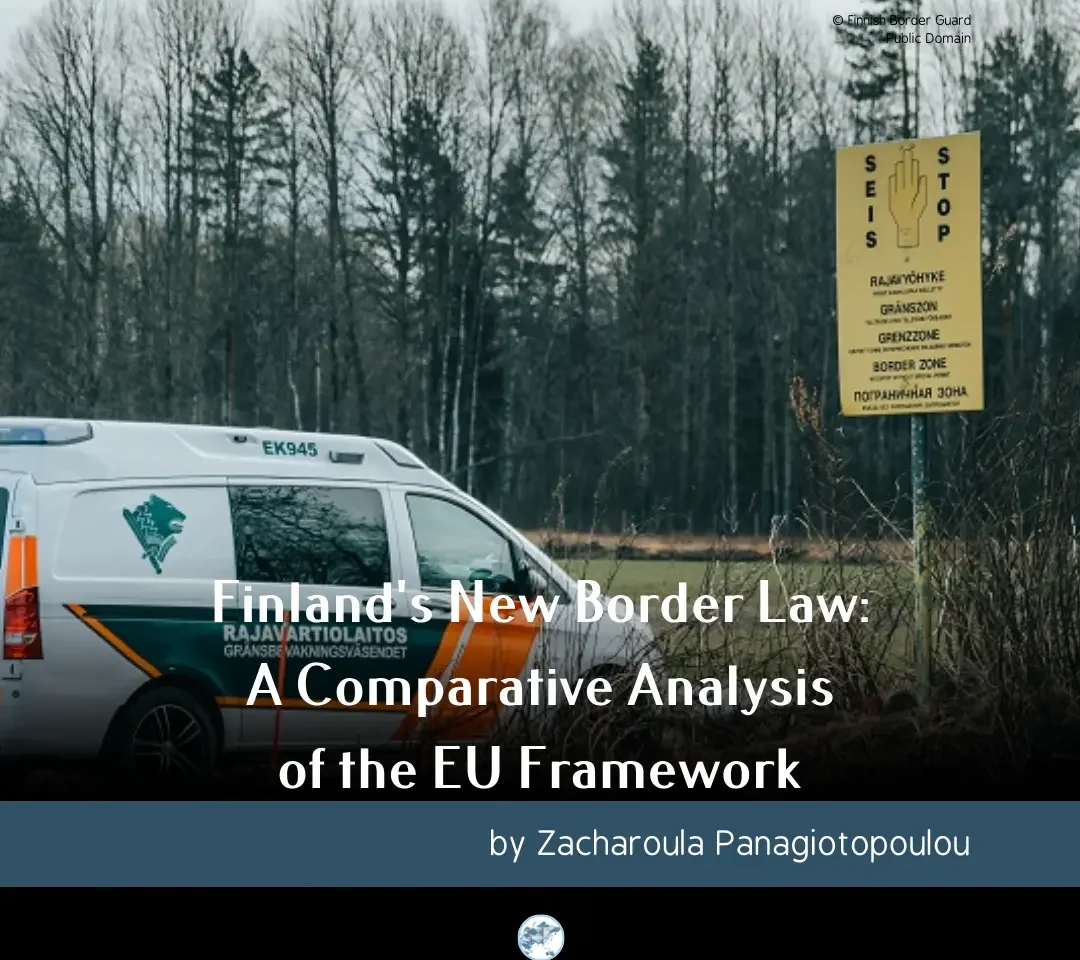
Finland’s New Border Law: A Comparative Analysis of the EU Framework
by Zacharoula Panagiotopoulou
This article examines Finland’s new border law in light of the country’s recent immigration policies and the broader EU immigration framework. It seeks to determine whether the new law deviates from EU guidelines and whether Finland’s duties as an EU member are undermined. The study presents how Finland has historically managed migration flows and how the new border law’s tenets align with or diverge from EU directives and regulations. Specifically, the article assesses whether Finland’s migration policy is aligned with the values and principles of the EU and how it impacts the country’s participation in EU processes. From 2023-2024, Finland has been implementing a stricter migration policy, including tougher asylum procedures, increased surveillance of asylum seekers and refugees, and revised entry requirements. This issue is relevant due to concerns over the violation of human rights and EU solidarity, while Europe is facing a resurgence of far-right parties. Finally, the study points out potential tensions between Finland’s national policy and the legal framework of the EU. In conclusion, Finland should balance its national policy with the commitments of the EU, not only to avoid legal disputes, but also to protect the human rights of refugee claimants.
Read the full paper below:
Picture: ‘Finnish Border Guard vehicle in the border zone’ by the Finnish Border Guard under a Public Domain License.

The opinions expressed in this publication are those of the author. They do not purport to reflect the opinions or views of the Institute of International Relations or its Researchers.